
E-mail:
xiny0207@gmail.com
Tel: +86-18225803110

Views: 0 Author: Site Editor Publish Time: 2026-07-01 Origin: Site


Purchasing a skid unit fire pump is a high-stakes balance between water capacity, vehicle payload, and pump performance. You move past basic definitions quickly when real property is on the line. Firefighting requires dependable, purpose-built equipment. Mismatched components create severe operational risks. You might overload a utility vehicle, causing dangerous instability. You might select a low-pressure pump, failing to penetrate deep brush fires. Alternatively, you might overspend on commercial-grade municipal features for a simple private homestead.
We designed this guide to eliminate the guesswork. We provide a strictly objective, criteria-based framework for evaluating, sizing, and purchasing the right equipment. You will learn how to match your vehicle's exact payload capabilities to the appropriate water tank size. We will decode technical pump specifications, ensuring you buy the exact pressure and volume you need. By the end of this guide, you will possess the knowledge to confidently procure a system built for your specific fire threat.
Payload Dictates Capacity: Water weight (8.34 lbs/gallon) is the primary limiting factor for any UTV firefighting skid; calculating wet weight against gross vehicle weight rating (GVWR) is non-negotiable.
Pressure vs. Volume: Pump selection must align with the primary application—high-pressure for brush/wildland penetration vs. high-volume for structural defense or water transfer.
Build vs. Buy: While DIY setups save upfront capital, factory-built units offer tested baffling, weight distribution, warranty protection, and liability reduction.
Every successful equipment purchase begins by defining the deployment environment. You must establish strict success criteria based on where and how you will fight fires. A system designed for a paved municipal road will fail miserably in a rugged forest environment.
Wildland firefighting requires extreme mobility. Operators navigate uneven terrain, steep inclines, and dense vegetation. Therefore, any UTV firefighting skid must feature a low-profile design. A low center of gravity prevents vehicle rollovers on dangerous slopes. Tall, narrow tanks create severe top-heavy hazards.
Brush response heavily emphasizes "pump-and-roll" capabilities. Fast-moving grass fires require continuous forward movement. The operator drives the vehicle while a passenger sprays water simultaneously. This tactic requires an independent engine driving the pump. You cannot rely on power take-off (PTO) systems if you need to adjust driving speed independently of pump pressure.
Best Practices:
Select tanks wider than they are tall.
Ensure the pump controls are accessible from the vehicle cab or easily reached by a walking crew member.
Equip the unit with a heavy-duty brush guard to protect the pump engine from striking debris.
Municipal fire departments face different challenges. They handle larger structural threats, vehicle fires, and extensive wildland-urban interface (WUI) zones. Municipal fire departments mount systems on robust flatbed trucks or custom small pumpers; these larger chassis accommodate higher water capacities, typically ranging from 500 to over 1,000 gallons.
Integration matters heavily for municipal fleets. These systems must seamlessly connect with existing apparatus. They frequently utilize drafting capabilities. Drafting allows the pump to pull water from static sources like ponds, swimming pools, or portable drop tanks. This extends operational time long after the onboard tank runs dry.
Common Mistakes:
Failing to specify matching hose threads (like NH/NST) used by the rest of the department fleet.
Overlooking the need for a high-quality drafting primer on the pump.
Mounting the unit too far forward, making the pump engine impossible to service.
Farmers, ranchers, and private landowners need utility-focused applications. They use these units for controlled burn management, daily dust suppression, and emergency property protection. They rarely fight fires daily. Instead, they require equipment that starts reliably after sitting idle for months.
Homestead defense requires balancing reliable standby readiness against strict budget constraints. You do not need expensive, polished aluminum diamond plate. You do need a reliable engine, durable plumbing, and an easy winterization process. Versatility is key. A good homestead unit can wash heavy machinery on Tuesday and suppress a fence-line brush fire on Friday.
You cannot evaluate a system based on aesthetics. You must deconstruct the technical specifications. These core features completely dictate field performance, safety, and operational lifespan.
Pump selection causes the most confusion for buyers. You must choose between pressure and volume. High-pressure centrifugal pumps excel at atomization. They break water into tiny droplets. This creates a cooling fog, which is ideal for smothering brush fires. High pressure also pushes water through incredibly long hose lays up steep hills. A quality portable fire pump usually utilizes this high-pressure design.
Conversely, high-volume pumps move massive amounts of water quickly. They lack the pressure to spray a long distance. They work best for drafting, bulk water transfer, and gross decontamination. If you attempt a direct fire attack using a simple volume transfer pump, the stream will fall short.
Engine reliability powers the entire system. Look for proven commercial engines. Honda and Vanguard engines are widely trusted and commonly specified in portable fire pumps. Choose an electric start mechanism for rapid deployment. However, always ensure a manual pull-start backup exists. Batteries fail, but a pull cord works universally.
The water tank forms the foundation of your unit. Manufacturers use three primary materials: polypropylene, aluminum, and fiberglass. Polypropylene (specifically copolymer) dominates modern designs. It offers exceptional durability, resists UV degradation, and flexes slightly upon impact without cracking.
Tank Material Comparison Chart
Material Type |
Durability |
Weight Factor |
Corrosion Resistance |
|---|---|---|---|
Polypropylene |
Extremely High (Flexes) |
Moderate |
Complete Immunity |
Aluminum |
High (Rigid) |
Lightweight |
Prone to pitting over time |
Fiberglass |
Moderate (Can crack) |
Heavy |
High |
Internal baffling serves a critical safety role. Baffles are interior walls inside the tank. They contain small holes that allow water to flow slowly. As you drive, water sloshes violently. A sudden stop shifts hundreds of pounds of water forward. This fluid momentum is called "surge." Without proper baffling, water surge easily causes vehicle rollovers. Baffles break up this kinetic energy, keeping the vehicle stable.
Plumbing routes the water from the tank to the pump, and finally to the hose. Galvanized pipes rust internally over time. High-pressure PVC works for strict budgets but turns brittle in extreme cold. Stainless steel offers the best longevity. It withstands high pressures, severe weather, and rough vibrations without fracturing.
Hose reels manage your attack line. Manual rewind reels cost less and require zero electrical maintenance. Electric rewind reels save immense physical labor, especially when repeatedly rolling up 100 feet of heavy, wet hose. Standardize your threads. Ensure all manifolds, valves, and nozzles use threads (like NH/NST or NPSH) that perfectly match your existing property or department equipment.
Many buyers face a distinct decision-stage hurdle. They wonder if they should build their own unit to save money. This decision requires an objective assessment of upfront capital, labor hours, and operational risk.
Building your own system seems cost-effective initially. You purchase an intermediate bulk container (IBC tote), a generic water pump, and some hoses. However, hidden costs accumulate rapidly. You spend countless labor hours sourcing compatible parts. You must engineer custom mounting brackets. Specialized welding and high-pressure plumbing require distinct skills.
More importantly, DIY setups carry massive safety risks. A standard IBC tote lacks internal baffling. If you fill a 275-gallon tote, you carry roughly 2,300 pounds of water. If that unbaffled water surges during a turn, your truck will likely spin out or roll over. DIY builders often severely underestimate the structural reinforcement required to safely transport dynamic fluid loads.
Factory-built systems eliminate the guesswork. Engineers design these units specifically for vehicular transport. They provide highly predictable dry and wet weight metrics. This exact data guarantees payload compliance. You never guess if your vehicle can handle the load.
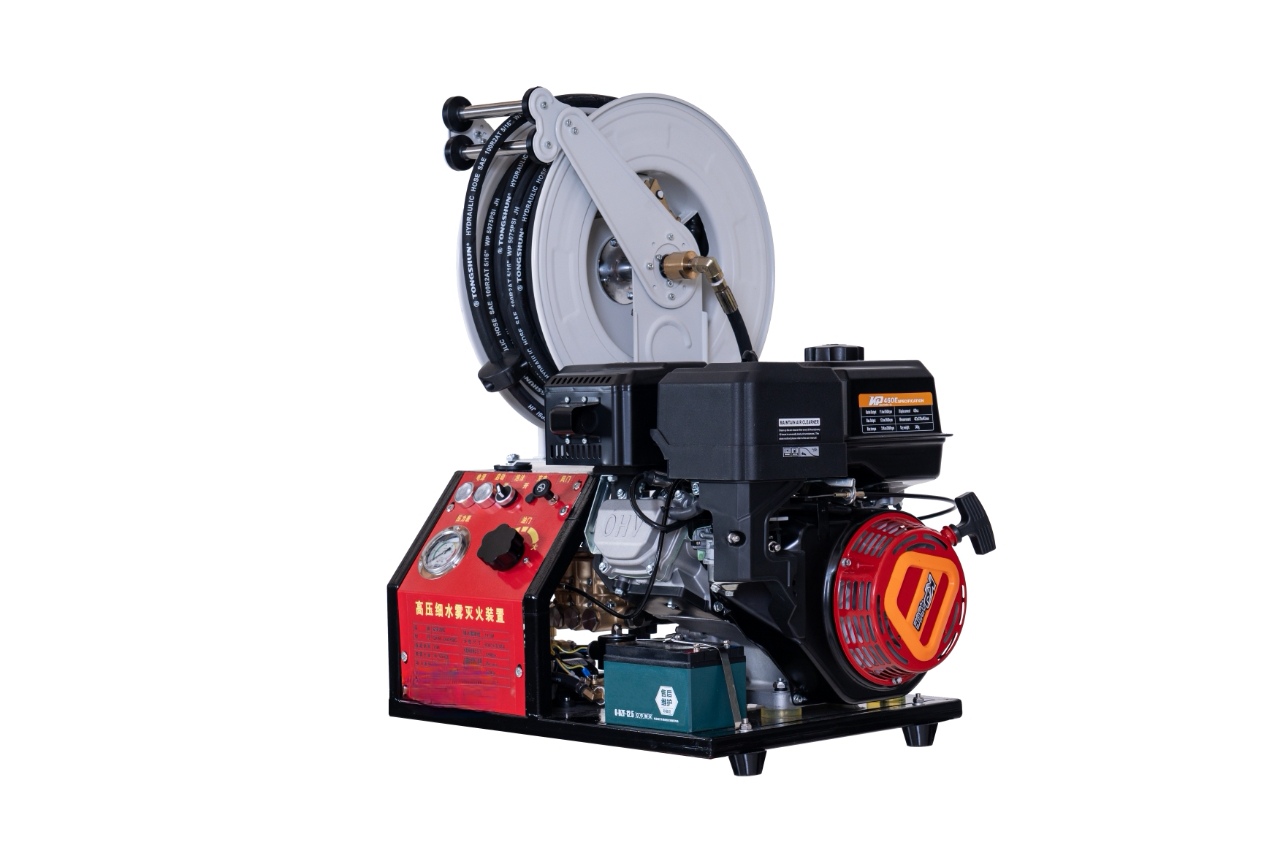
Purchasing a professionally engineered Skid Unit Fire Pump provides integrated warranties. The engine, the pump head, and the tank all carry manufacturer backing. You rely on single-point vendor support if a component fails. Furthermore, these units comply with recognized safety and manufacturing standards. This compliance remains absolutely crucial for municipal buyers facing strict liability regulations.
Integrating a heavy piece of equipment into a utility vehicle introduces severe risks. Implementation realities dictate that you must respect the physical limits of your chassis. Overloading a vehicle voids warranties, destroys suspensions, and causes fatal accidents.
Water weight represents the primary limiting factor in any mobile firefighting setup. One gallon of water weighs 8.34 pounds. You must calculate the "wet weight" with absolute precision. A half-empty tank still weighs hundreds of pounds.
Use this strict formula to determine your total load:
Find the Skid Dry Weight: The combined weight of the empty tank, pump, engine, and frame.
Calculate Water Weight: Multiply your tank capacity (in gallons) by 8.34.
Add Gear Weight: Include the weight of full hoses, nozzles, hand tools, and fuel.
Add Passenger Weight: Account for the driver and any riding crew members.
You must compare this final total directly against your vehicle's Gross Vehicle Weight Rating (GVWR) or specific bed payload capacity. Never use the vehicle's towing capacity for this calculation. Towing capacity measures what the vehicle can pull on wheels. Payload capacity measures what the vehicle can carry on its suspension. Confusing these two numbers leads to catastrophic structural failures.
Weight only solves half the compatibility equation. You must verify the dimensional footprint. Measure the exact bed dimensions of your truck or UTV. Pay specific attention to the distance between the wheel wells. Ensure the tailgate can close securely once the unit slides into place. Some units require removing the tailgate entirely.
Securement methods dictate operational safety. Hard-mounting offers the best stability. You bolt the skid frame directly through the vehicle bed into the chassis. This requires drilling but prevents any shifting. Heavy-duty strap points offer an alternative for temporary setups. If you use straps, they must exceed the total wet weight rating by a significant safety margin.
Finally, ensure access to the pump engine. Once mounted, you must easily reach the fuel tank, the oil dipstick, and the spark plug. If the mounting position buries the engine against the truck cab, routine maintenance becomes impossible without a forklift.
Procurement requires a systematic approach. Use this actionable checklist to evaluate vendors and shortlist the best equipment for your specific needs.
Define Primary Use Case: Map your required GPM (Gallons Per Minute) and PSI (Pounds per Square Inch) directly to the specific fire threat. Brush fires need high PSI. Water transfer needs high GPM.
Verify Weight Limitations: Confirm your vehicle's exact payload capacity before finalizing any tank size. Run the wet weight formula meticulously. Leave at least a 10% safety margin.
Assess Maintenance Accessibility: Inspect the unit design carefully. Check for easily accessible drain valves. Winterization requires draining all water completely. You must easily reach the oil fill ports and air filters while the unit sits in the vehicle.
Vendor Support & Parts: Investigate the replacement parts ecosystem. Ensure the pump utilizes standard, non-proprietary parts. You want to buy replacement seals, spark plugs, and valves from a local hardware store, not wait weeks for overseas shipping.
Lead Times and Shipping: Factor logistical realities into your purchase. Consider freight costs and liftgate delivery requirements. Anticipate seasonal manufacturing delays. Buy your equipment well before the dry wildland fire season begins.
A successful equipment purchase hinges on strict compatibility. You must match the physical water capacity to your vehicle's strict payload limits. Simultaneously, you must align the technical pump specifications to your specific fire threat. Overloading a UTV or under-speccing a wildland pump creates dangerous, cascading failures in the field.
Prioritize fundamental safety features over flashy aesthetics. Invest in proper internal tank baffling to maintain vehicle stability. Choose reliable, commercial-grade engine and pump combinations. Proper weight distribution and rapid engine starts will save property, while cheap plumbing will only cause headaches.
Do not guess when life and property are at stake. Take action today. Measure your vehicle bed, check your manufacturer's payload capacity, and consult with a firefighting equipment specialist. Request a formal payload compatibility check, and view a catalog of properly engineered, factory-tested units to secure your property safely.
A: Typically 50 to 75 gallons. This limit is dictated strictly by the UTV's bed payload capacity minus passenger weight. Since water weighs 8.34 pounds per gallon, a 75-gallon tank adds over 625 pounds of fluid alone. Always check your specific vehicle manual before loading.
A: It is not recommended for direct fire attack. Standard transfer pumps lack the necessary PSI to throw water effectively over long distances or penetrate thick brush. However, you can successfully use them for drafting operations, filling tanks, or soaking large, flat areas.
A: Completely drain the main tank. Run the pump dry for a few seconds to clear the internal impeller. Open all manifold valves to release trapped water. Finally, run RV antifreeze through the pump casing, plumbing, and hose reel to prevent ice expansion fractures.
A: No, they operate independently using their onboard tanks for immediate attack. However, most quality units feature a suction port. If equipped with a drafting hose and primer, they can pull unlimited water from external sources like ponds, pools, or hydrants to sustain long operations.


