
E-mail:
xiny0207@gmail.com
Tel: +86-18225803110

Views: 0 Author: Site Editor Publish Time: 2026-07-06 Origin: Site


Industrial fires demand an immediate, specialized response. Standard water hoses often fail against complex chemical spills. You need robust equipment built specifically for high-risk infernos. Flammable liquids and volatile gases create unique, life-threatening hazards daily. Suppressing these threats requires rapid chemical interference rather than simple temperature cooling. Plain water spreads burning oil across flat surfaces rapidly. It also conducts high-voltage electricity dangerously. Using water near live transformers causes fatal electrocution hazards.
Without the correct suppression agent, massive industrial fires quickly escalate completely out of control. They destroy valuable infrastructure within minutes. We will comprehensively explore the mechanics behind heavy-duty emergency apparatuses. You will clearly understand their core system components. We will examine their advanced working principles closely. You will gain actionable insights regarding proper maintenance procedures.
Read on to discover exactly how specialized suppression vehicles deliver unmatched safety. They protect critical facilities worldwide seamlessly. Firefighting teams rely on their rapid deployment capabilities. Our detailed guide unpacks every technical aspect entirely. You will learn how to deploy these assets effectively across volatile environments.
A Powder Fire Truck utilizes specialized dry chemicals to extinguish severe blazes. They bypass traditional water delivery mechanisms entirely. These apparatuses tackle Class B and Class C fires highly effectively. Manufacturers load the primary storage tanks utilizing sodium bicarbonate primarily. Some models utilize potassium bicarbonate instead. Fire protection engineers call this variant Purple-K. These refined chemical agents interrupt combustion chain reactions instantly. They provide massive knockdown power during critical emergencies.
The National Fire Protection Association recognizes these agents officially. NFPA standards classify them for flammable liquids and energized electrical fires. You cannot use plain water during these specific scenarios. These vehicles carry massive quantities of extinguishing agents onboard. Standard commercial units hold thousands of kilograms inside sealed vessels. They deliver high discharge rates and rapid knockdown capability within seconds. This rapid delivery prevents catastrophic structural failures. Industrial safety officers depend on them daily. They provide the ultimate defense line against total facility loss.
Chemical composition dictates the overall extinguishing effectiveness. Monoammonium phosphate handles Class A fires alongside liquid hazards. This is known as an ABC multipurpose dry chemical agent. Potassium bicarbonate offers superior performance on massive fuel spills. These powders are engineered carefully by fire protection specialists. They add special flow-promoting ingredients continuously. These additives prevent severe clumping inside the storage tanks. Moisture repellents keep the agent completely dry. We rely on these chemical properties during intense response operations.
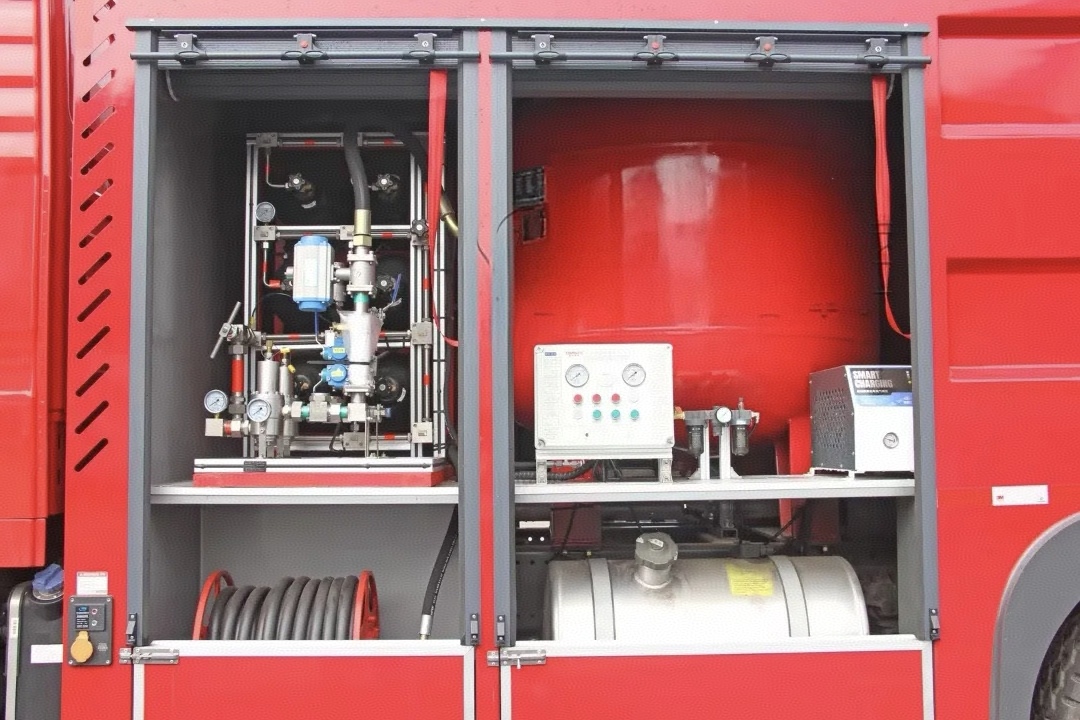
Engineering these vehicles requires precise mechanical integration constantly. They house multiple synchronized pressure systems safely. Each component ensures rapid deployment during critical emergencies. Manufacturers build them upon heavy-duty commercial truck chassis. These frames support immense weight loads reliably. We can break down the primary structural components easily. You must understand how these intricate systems interact.
High-Pressure Nitrogen Cylinders: These cylinders provide the necessary propellant force. Nitrogen remains completely inert and dry constantly. It pushes the chemical agent outward aggressively.
Agent Storage Vessels: Thick steel walls contain the dry chemicals safely. Engineers design them for extreme internal pressure limits. Tanks must undergo hydrostatic testing every 12 years per NFPA 1901 Section 11.2.2. Annual visual and functional inspections are required, but not full hydrostatic tests.
Pneumatic Control Valves: These heavy-duty valves regulate gas flow perfectly. They open instantly upon operator command. This precision guarantees accurate fluidization times.
Delivery Piping Networks: Specialized steel pipes route the agent efficiently. Long-radius bends prevent internal friction losses. Smooth interiors keep the powder flowing rapidly.
Roof-Mounted Monitors: Operators control these directional nozzles remotely. They direct massive chemical clouds toward the flames. We utilize them for large-scale hazard areas.
Ground Handline Hoses: Ground crews utilize these flexible lines nearby. They allow manual suppression inside tight industrial spaces. Crews aim them directly at localized fuel sources.
These interconnected components create a seamless suppression system. High-quality engineering prevents dangerous pressure leaks completely. Crews rely on these mechanisms under extreme duress. You must inspect every individual component routinely. Component failures lead to disastrous operational delays. We emphasize strict component familiarity for all operators.
Understanding combustion chemistry helps explain the suppression process thoroughly. Fires need heat, fuel, oxygen, and uninhibited chemical reactions. A DCP fire truck attacks the chemical reaction phase directly. It breaks the fire tetrahedron apart instantly. The physical smothering effect plays a secondary role only. Radical scavenging remains the primary extinguishing mechanism. You see immediate results upon deployment.
The discharge sequence begins at the main control panel. The operator opens the primary pneumatic valves first. High-pressure nitrogen gas fluidizes the resting powder deeply. This mixture surges through the heavy-duty piping network. The monitor nozzle expels a massive chemical cloud outward. This dense cloud blankets the burning fuel source completely. The microscopic particles bind free radicals instantly. This binding action stops the combustion chain reaction abruptly.
The visible flames disappear in mere seconds. You must understand the limitations regarding cooling capabilities. These chemicals do not cool the fuel significantly. Re-ignition remains a serious risk afterward. Crews must secure the hot zone immediately. They often deploy specialized foam blankets subsequently. This secondary action prevents flammable vapors from escaping. We combine both methods for maximum safety.
Industrial zones pose incredibly unique thermal risks globally. Standard firefighting methods often fail completely here. Specialized vehicles excel in these extreme operational environments. They mitigate disasters across various high-risk sectors effectively. We see them deployed continuously across critical infrastructure sites.
Petrochemical Refineries: Massive oil spills require rapid chemical suppression. Dry agents knock down immense liquid fires rapidly. They secure ruptured pipeline areas perfectly.
Aviation Runways: Aircraft carry massive volumes of volatile jet fuel. Crash rescue teams deploy dry agents instantly. They clear escape paths for trapped passengers safely.
Electrical Substations: Live voltage creates severe electrocution hazards constantly. Dry chemicals lack electrical conductivity completely. Technicians extinguish transformer fires without cutting power initially.
Chemical Manufacturing Plants: Reactive materials demand inert extinguishing agents strictly. Powder isolates the chemical hazard safely. It prevents secondary hazardous reactions effectively.
Offshore Drilling Platforms: Confined spaces concentrate volatile gas leaks dangerously. Compact suppression units flood the lower decks quickly. They suppress sudden flash fires immediately.
These specific environments demand uncompromising reliability constantly. Facility managers position these vehicles near high-risk zones strategically. Rapid response times prevent minor leaks from becoming catastrophes. We train our teams according to these specific scenarios. You must adapt your tactics based upon the exact environment.
We must compare different fire suppressants clearly. You need to understand their specific tactical advantages. This knowledge guides effective deployment decisions during emergencies. Choosing the wrong agent causes severe collateral damage. We compiled a direct comparison chart below. It illustrates the primary operational differences perfectly.
Agent Type |
Primary Fire Class Targets |
Electrical Safety Rating |
Initial Knockdown Speed |
Post-Fire Cleanup Effort |
|---|---|---|---|---|
Dry Powder Agents |
Class B (Liquids), Class C (Electrical) |
Excellent (Non-Conductive) |
Extremely Fast |
High (Residue Removal) |
Standard Water |
Class A (Combustibles Only) |
Poor (Highly Conductive) |
Slow (Relies on Cooling) |
Moderate (Water Damage) |
AFFF Foam |
Class B (Hydrocarbon Liquids) |
Poor (Contains Water) |
Moderate |
High (Environmental Concerns) |
Clean Agents (Gas) |
Class A, B, C (Server Rooms) |
Excellent (Non-Conductive) |
Fast |
Minimal (Leaves No Residue) |
The chart highlights specific operational strengths clearly. You see stark differences regarding electrical safety ratings. Dry agents dominate regarding initial knockdown speed explicitly. However, they require extensive post-fire cleanup efforts. The fine particles settle across sensitive machinery eventually. You must balance rapid suppression against potential cleanup costs. We always prioritize human life over equipment preservation.
Operating a Dry Chemical Powder Fire Truck requires extensive technical training. Crews must follow strict deployment protocols strictly. Mistakes can cause disastrous equipment failures quickly. We outline several critical tactical best practices below. You must memorize these steps completely.
First, always assess the ambient wind direction carefully. You must deploy upwind from the primary fire source. Wind scatters the lightweight agent easily. Spraying downwind maximizes the chemical cloud density. It pushes the suppressant directly into the thermal column. Second, fully fluidize the storage tank prior to discharge. Open the nitrogen gas valve slowly. Let the gas mix thoroughly before initiating the spray. Rushing this specific step causes severe pipe blockages.
Third, utilize short, highly controlled monitor bursts. Continuous spraying wastes the limited agent supply quickly. A standard tank empties completely in under two minutes. You must conserve resources intelligently during massive events. Fourth, aim the nozzle precisely at the fuel base. Sweeping motions cover the burning liquid surface evenly. Do not spray into the upper atmospheric flames. You must smother the source directly.
Preventative maintenance guarantees continuous operational readiness safely. The extinguishing agent tends to compact over time naturally. Constant vibration from driving causes severe material settling. Hardened agents block the discharge pipes completely. Crews must perform dedicated fluffing procedures regularly. You pump nitrogen through the bottom tank valves. This process keeps the agent loose and aerated. We recommend performing this vital maintenance task monthly.
Checking propellant pressure levels remains absolutely crucial. Technicians inspect the analog pressure gauges weekly. Low nitrogen pressure results in weak discharge ranges. You must replace leaking cylinders immediately. Faulty regulators require complete replacement without hesitation. We document every pressure reading in detailed logbooks. You maintain absolute accountability through strict documentation.
Moisture prevention requires absolute vigilance constantly. Water ruins the dry agent completely. It causes severe caking inside the steel vessel. All rubber seals must remain perfectly intact. Mechanics inspect the top fill caps for microscopic cracks. We clear all delivery hoses utilizing compressed air post-discharge. Leaving residual powder inside hoses attracts ambient humidity quickly. Proper cleaning prevents future operational blockages entirely.
Engineers constantly improve these specialized vehicles annually. New technologies enhance overall safety and efficiency. We see better electronic monitor controls today. Joystick operations replace manual hand cranks completely. Operators stay protected inside the armored cabin safely. They avoid direct exposure to extreme radiant heat.
Automated fluidization speeds up deployment times significantly. Computerized valves open in precise sequential order automatically. This eliminates human error during intense emergencies completely. Sensors monitor tank pressure levels continuously. Digital displays provide real-time data to response crews. They remove the guesswork from complex suppression tactics.
Modern chassis feature improved weight distribution algorithms. Engineers lower the vehicle center of gravity strategically. This prevents rollover accidents during high-speed emergency responses. Advanced braking systems handle the massive weight flawlessly. We expect further integrations utilizing artificial intelligence soon. Drones may assist operators in targeting flames precisely. The industry evolves rapidly toward total automation.
We can summarize several vital takeaways clearly. First, these heavy-duty vehicles extinguish flammable liquid fires instantly. Second, their non-conductive nature protects frontline responders from electrocution. Third, strict monthly maintenance protocols prevent critical system failures effectively. They represent the ultimate defense against industrial catastrophes.
You must evaluate your facility risks thoroughly today. Upgrade your industrial suppression fleet accordingly. Train your emergency response teams comprehensively regarding proper tactics. Proper preparation prevents catastrophic industrial losses entirely. Ensure your safety equipment remains fully operational always.
A: They primarily handle Class B and Class C fires. Class B involves highly flammable liquids. Class C involves energized electrical equipment. Multi-purpose agents also suppress Class A ordinary combustibles effectively.
A: Using them indoors poses significant visibility risks. The dense chemical cloud obscures vision completely. Mild inhalation hazards also exist. You must ensure proper ventilation before entering the area.
A: No, these specific agents are entirely non-conductive. This makes them ideal for electrical substations. Firefighters stay safe from severe shock hazards during deployment.
A: Discharge times vary heavily by tank size. A standard vehicle empties completely in 60 to 120 seconds. Operators must use controlled bursts strictly.
A: Many standard powders break down protective foam blankets quickly. You must utilize specialized dual-agent systems carefully. Purple-K works best alongside specific compatible foams.


