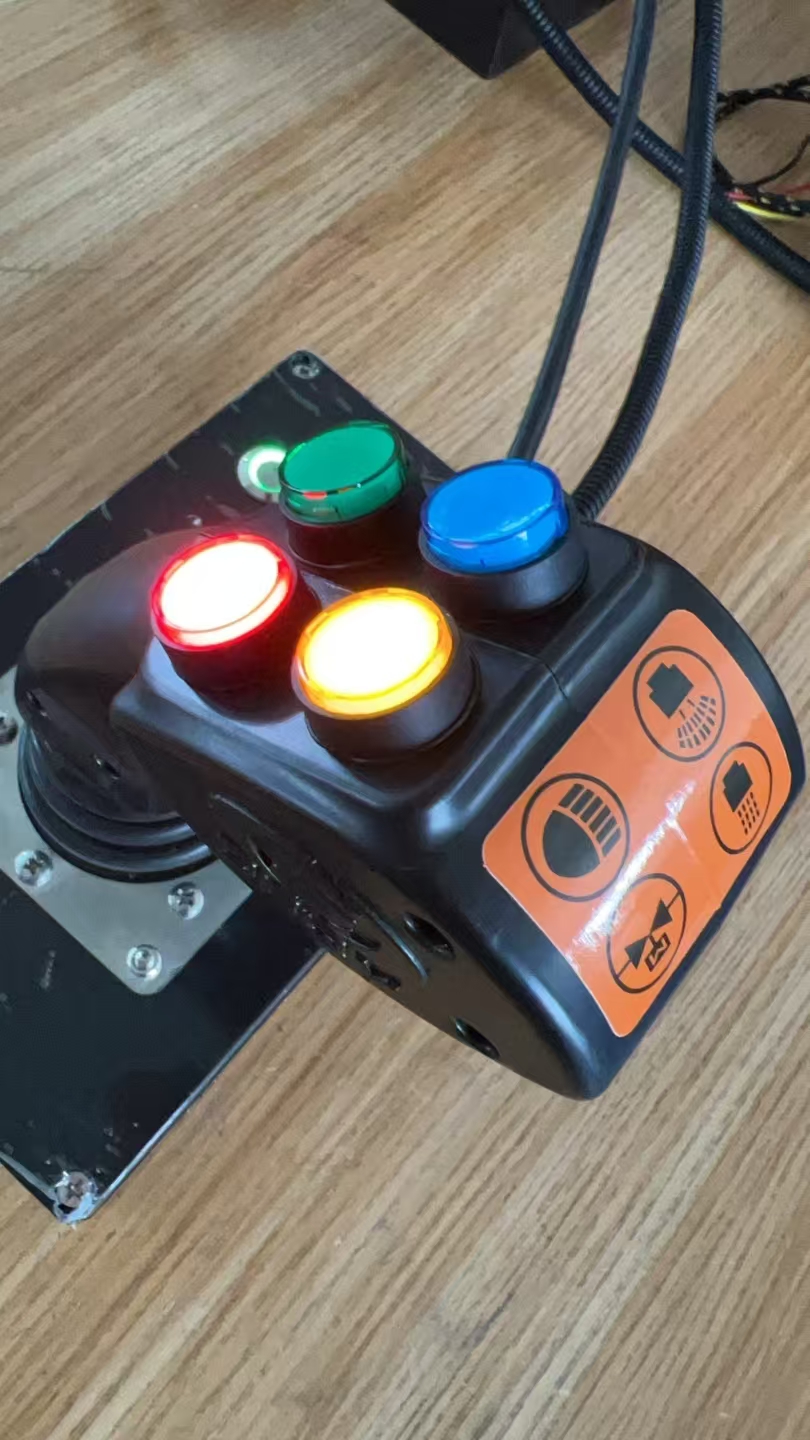
In high-hazard industrial facilities and demanding municipal firefighting, deploying high-volume water safely is a critical operational challenge. Manual operation puts personnel at direct risk and significantly limits your response speed. Every second matters during a sudden thermal event. The ongoing shift toward automated firefighting systems requires precise and highly reliable equipment. Emergency response teams can no longer rely on outdated manual turrets.
This comprehensive guide breaks down the mechanics, evaluation criteria, and implementation realities of automated monitors. We designed this analysis to help engineering, safety, and procurement teams specify the right system for their hazard profile. You will learn how these advanced mechanical systems function in extreme environments. We will explore how to evaluate them effectively against strict regulatory standards.
Key Takeaways
An electric fire monitor is a motorized, automated water cannon designed for high-capacity fire suppression, operated via wired or wireless control systems.
The system works by translating electronic control signals into precise motor movements, adjusting horizontal rotation, vertical elevation, and nozzle spray patterns.
Core evaluation criteria include flow rate capacity, trajectory reach, material durability against corrosion, and integration protocols (e.g., CAN bus, PLC).
Successful deployment requires rigorous attention to power redundancy, Ingress Protection (IP) ratings, and compliance with standards like NFPA and FM Global.
The Anatomy of an Electric Fire Monitor
We define this heavy-duty asset as a fixed or vehicle-mounted turret utilizing electronic actuators instead of manual tillers. Integrating an Electric Fire Monitor dramatically upgrades your overall suppression capabilities. It eliminates the need for your personnel to manually aim the heavy nozzle during operations. We can break down the anatomy of these systems into four core components.
Waterway Body: Manufacturers typically cast these from hard-anodized aluminum, specialized brass, or heavy-grade stainless steel. They must handle extreme internal water pressure. They must also resist severe environmental corrosion over decades of exposure.
Electric Actuators/Motors: These are fully enclosed, heavy-duty servo or stepper motors. They actively drive the pan and tilt axes. They ensure completely smooth horizontal and vertical movement under extreme load.
Logic/Control Box: This acts as the centralized onboard brain. It rapidly processes incoming inputs from your remote transmitters. It translates operator commands into precise mechanical motor actions.
Electric Nozzle: It utilizes specialized motorized baffle adjustments. They allow operators to transition smoothly between a highly focused solid bore and a wide, protective fog pattern.
The waterway body serves as the foundational skeleton. High-pressure water generates significant turbulent force as it travels through the curves of the monitor. Engineers design internal vanes to straighten this water flow. Straightened water flow ensures a tighter, more accurate stream trajectory. The electric motors must generate enough torque to overcome this internal hydraulic friction.
Core Operating Mechanisms: How It Works in the Field
How does this equipment actually function during an active emergency? We can map the operational flow through a highly specific mechanical sequence. Understanding this sequence helps your team maintain the equipment properly.
Signal Transmission: The operator uses a remote control fire monitor console to send positional data. You can utilize a portable joystick, an industrial RF remote, or a central PLC dashboard.
Motor Actuation: Control signals travel directly to the motors via standardized industrial protocols. Common hardwired networks include CANbus, RS-485, or standard Ethernet connections. They ensure virtually zero latency in command execution.
Movement Execution: The motors rely on heavy-duty worm gears or planetary gear systems to rotate the turret. This specific gearing inherently prevents dangerous back-driving. The forceful water pressure cannot push the monitor out of its set targeting position.
Feedback Loops: Advanced models incorporate sophisticated built-in encoders. They send exact positional data back to your primary control system. They allow for automated oscillation patterns and targeted positional pre-sets.
Signal transmission reliability dictates the safety of your operators. In high-interference industrial environments, hardwired CANbus networks offer superior stability. Wireless systems require careful frequency planning. The gear reduction ratio inside the motor housing determines the travel speed. A higher gear ratio provides exceptional holding torque. A lower gear ratio prioritizes rapid target acquisition speed.
Primary Deployment Environments
Different hazard zones require highly specific deployment strategies. You will find these automated turrets utilized in three primary operating environments. Each environment demands specific hardware configurations.
Mobile Apparatus: They function as a high-capacity fire truck roof monitor or a specialized bumper turret. A single operator sits safely inside the fully enclosed cab. They direct the massive water flow while remaining completely protected from extreme radiant heat. This setup maximizes municipal response efficiency.
Fixed Industrial Hazards: Engineers permanently mount these heavy units on elevated towers or structural platforms. They protect high-risk chemical tank farms and massive aircraft hangars. They also safeguard volatile recycling plants and highly corrosive marine docks. Permanent mounting requires rigorous structural engineering.
Automated Systems: You can integrate these units directly with IR or thermal flame detectors. This creates completely autonomous detection-and-suppression loops. They activate instantly in designated high-risk zones without human intervention. They extinguish incipient fires before plant personnel even arrive.
Evaluation Criteria: Specifying the Right System for Your Operations
Specifying the right system requires careful hydraulic and mechanical analysis. You must match the physical hardware precisely to your specific operational realities.
Hydraulic Performance Requirements: You must match the rated flow rate and operating pressure to your existing pump infrastructure. You also need to calculate the internal friction loss carefully. Pushing 2,000 gallons per minute requires massive supply pipes. You must ensure your municipal or facility water mains can support this sudden demand drop.
Material Selection vs. Environment: Your operational environment completely dictates the proper metal casting. Incorrect material selection leads to catastrophic failure during operation.
Material Type
Primary Characteristics
Ideal Deployment Environment
Hard-Anodized Aluminum
Exceptionally lightweight, cost-effective, standard durability
Municipal fire trucks, standard indoor industrial facilities
Refineries, heavy manufacturing, moderate chemical exposure
Stainless Steel (316L)
Maximum corrosion resistance, highest tensile strength
Offshore oil rigs, marine docks, severe chemical environments
Control System Architecture: You must evaluate the baseline reliability of wireless RF signals versus hardwired networks. You should assess deep integration capabilities. Ensure the new systems connect smoothly with your existing SCADA architecture or fire alarm control panels.
Range of Motion and Speed: Verify the maximum rotation degrees physically allowed by the joints. Many industrial units offer up to 360 degrees of continuous rotation. Check the maximum elevation and depression angles carefully. Confirm the exact degrees-per-second travel speed to ensure rapid target acquisition.
Best Practices for Specification
Always conduct a comprehensive hydraulic flow test before finalizing your engineering specifications.
Demand a factory acceptance test (FAT) for automated detection-and-suppression integration loops.
Specify dual-encoder models if you require highly precise automated oscillation patterns.
Common Mistakes to Avoid
Do not underestimate the aggressively corrosive nature of coastal marine environments.
Relying on standard aluminum in salt-heavy air leads to rapid equipment degradation.
Failing to account for the electrical power draw when sizing emergency backup generators.
Implementation Realities and Compliance Risks
Deploying automated suppression equipment involves incredibly strict engineering tolerances. You cannot afford a single point of failure during a critical thermal event.
Power Redundancy: These complex electric monitors require a continuous and exceptionally clean power supply. You typically utilize 12V/24V DC for mobile units or 110V/220V AC for fixed industrial platforms. A credible deployment plan must include dedicated uninterruptible power supplies. Hardened battery backups remain absolutely essential for critical high-risk facilities.
Environmental Vulnerabilities: The internal electronic components must survive severe high-pressure water exposure. They face extreme ambient temperatures and flying physical debris. You must specify systems carrying rigorous IP66 or IP67 ratings. This standardized rating protects the vulnerable internal motors and logic control boxes from moisture intrusion.
Manual Override Imperative: Catastrophic facility power failures happen frequently during major emergencies. The monitor must feature highly accessible, mechanically linked manual handwheels. They guarantee continuous mechanical operation regardless of the electrical grid status. Operators must know exactly how to engage these mechanical overrides under extreme stress.
Regulatory Compliance: You must shortlist only systems carrying relevant safety certifications. They must match your highly specific operational jurisdiction. Look for globally recognized FM Approved and UL Listed marks. Explosive environments mandate strict ATEX or IECEx certifications. NFPA compliance remains a baseline operational standard across North American industrial deployments.
Conclusion
Transitioning to electric fire monitors shifts your operational personnel entirely out of the immediate hazard zone. It enables significantly faster and far more precise fire suppression. Base your final hardware decisions on the specific environmental hazards present at your facility. Consider your ambient corrosion risks and localized explosion risks carefully.
Evaluate the required integration depth with your existing software architecture. Prioritize proven mechanical reliability under sustained high-pressure water flow. Your next critical step involves consulting directly with an experienced systems integrator. Ask their manufacturer engineering team to conduct a comprehensive hydraulic and structural analysis. Review all technical specification sheets thoroughly before initiating your final procurement cycle.
FAQ
Q: Can an electric fire monitor be operated if the primary power fails?
A: Yes. Industry-standard electric monitors are equipped with manual override handwheels or cranks, allowing operators to position the monitor and adjust the nozzle manually during a total power failure.
Q: What is the maximum flow rate of a fire truck roof monitor?
A: Flow rates vary by model and plumbing, but standard electric roof monitors typically deliver between 500 GPM and 2,000 GPM (1,900 to 7,500 LPM), with specialized industrial models pushing even higher volumes.
Q: How far can a wireless remote control fire monitor transmit?
A: Industrial RF (Radio Frequency) remotes typically offer a reliable operational range of 300 to 1,500 feet (90 to 450 meters), depending on line-of-sight, frequency selection, and localized electromagnetic interference.
Q: Are electric fire monitors safe for explosive or flammable environments?
A: Yes, provided they are explicitly rated for those zones. Monitors deployed in oil and gas or chemical facilities must feature explosion-proof enclosures and carry certifications like ATEX, IECEx, or Class I Div 1/2.