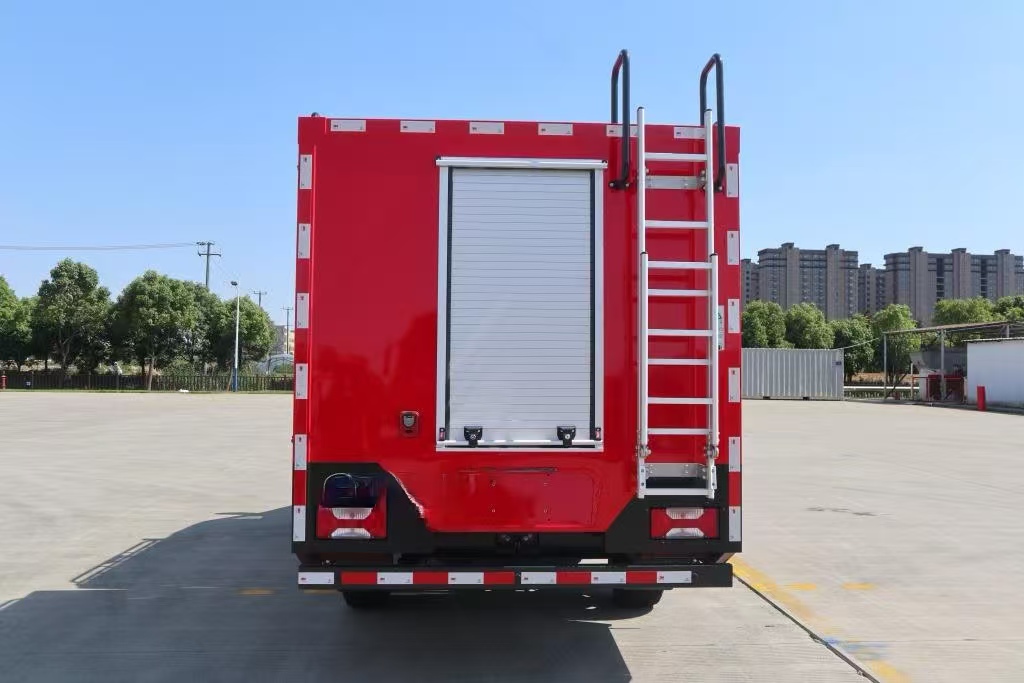
Fighting wildfires requires aggressive mobility in the most unforgiving environments on earth. Standard municipal engines simply cannot navigate steep grades, deep mud, or narrow timber trails. When the pavement ends, you need equipment built specifically for the wilderness. An operational gap often exists between urban apparatus capabilities and wildland realities. Heavy water payloads drastically alter a vehicle's center of gravity. This dynamic load significantly increases rollover risks on uneven terrain if the chassis is poorly engineered. Crews face immense danger when their trucks lack necessary mobility, structural reinforcement, and self-protection systems.
This guide breaks down the essential technical specifications needed to evaluate these specialized vehicles. You will learn how to balance payload capacity against extreme terrain mobility. Doing so ensures maximum crew safety during chaotic deployments. We also explore safety compliances and procurement strategies. These insights will help you evaluate, shortlist, and procure the perfect apparatus for your specific response area.
Key Takeaways
Terrain Dictates Chassis: Selecting between 4x4 and 6x6 drivetrains depends entirely on the operational topography and required Gross Vehicle Weight Rating (GVWR).
Pump-and-Roll is Non-Negotiable: A true wildland firefighting truck requires independent pump operation while moving to manage dynamic fire lines.
Safety Over-Engineering: Specialized crew protection, including roll cages and water curtain self-protection systems, are mandatory differentiators from urban trucks.
Classification Alignment: Procurement must align with recognized industry standards (e.g., Type 3 vs. Type 6) to ensure interoperability during mutual aid responses.
The Operational Gap: Why Municipal Engines Fail in Wildland Settings
Cities rely on paved roads and highly accessible fire hydrants. Structural fire engines reflect this environment. They feature massive water pumps, low ground clearance, and long wheelbases. These design choices maximize volume but destroy off-road capability. When you take a municipal engine off the pavement, it quickly becomes a liability. The wilderness demands a purpose-built Forest Fire Truck. These specialized vehicles tackle extreme gradients, unimproved dirt roads, and dense brush. They sacrifice maximum water volume for ultimate mobility.
Carrying hundreds of gallons of water creates severe physical challenges. Water is incredibly heavy. When it shifts inside a tank, it alters the vehicle’s center of gravity. We call this a dynamic load. On flat city streets, baffles inside the tank handle this movement easily. On a 30-degree mountain slope, however, a sudden water shift can trigger a catastrophic rollover. Wildland vehicles must sit on heavily modified chassis. Engineers lower the tank profile and widen the track width. They constantly negotiate the trade-off between payload capacity and terrain mobility.
To standardize these trade-offs, organizations like the NWCG utilize a specific typing framework. This system ensures incident commanders know exactly what a truck can handle before deploying it. Type 3 and Type 6 apparatus remain the most common wildland choices.
Classification
Primary Use Case
Water Capacity
GVWR & Mobility
Type 3
Heavy initial attack and structural triage in the wildland-urban interface (WUI).
500+ Gallons
Heavy GVWR. Slower on tight trails but carries substantial payload.
Type 6
Rapid response, remote access, and aggressive mobile attack.
Lighter GVWR (often standard commercial truck base). Highly agile.
Essential Chassis and Drivetrain Specifications for an Off-Road Fire Truck
The chassis serves as the foundation of any reliable off-road fire truck. Drive systems generally fall into two categories: 4x4 and 6x6. A 4x4 configuration offers unparalleled agility. It navigates tight switchbacks and narrow forest roads effortlessly. However, a two-axle system limits your total payload. When you need to move massive amounts of water and heavy gear, a 6x6 drivetrain becomes necessary. The third axle distributes the immense weight more evenly. This distribution prevents the vehicle from sinking into soft mud or loose sand. You trade a wider turning radius for vastly superior traction and payload capacity.
Clearance and suspension dictate where a truck can physically travel. Standard commercial axles often snag on rocks or tree stumps. Wildland trucks require heavy-duty reinforced axles to survive harsh impacts. Approach, departure, and breakover angles must remain extremely high. These aggressive angles prevent the front bumper or rear tailboard from dragging when crossing steep ravines. Many manufacturers install parabolic springs or specialized independent off-road suspensions. These setups articulate wildly over boulders while keeping all tires firmly planted on the ground.
Tire selection and braking technology separate mediocre trucks from elite apparatus. Severe-duty off-road tires provide the essential bite needed for loose dirt. Central Tire Inflation Systems (CTIS) offer a massive tactical advantage. The driver can drop tire pressure from the cab to increase the tire footprint in soft sand, then re-inflate for hard-packed dirt. Braking poses another major challenge. Descending a steep mountain road while fully loaded will quickly overheat traditional friction brakes. Engine braking systems (e.g., Jacobs or similar) are strongly recommended to manage steep descents safely. They use engine compression to slow the vehicle safely during long, steep descents.
Purpose-Built Water and Pump Configurations
Stationary pumping works for house fires. Wildland firefighting requires constant movement. Fires move rapidly across dry brush, forcing crews to flank the fire line dynamically. Pump-and-roll capability is operationally essential for dynamic fire line engagement, though not a formal NWCG typing requirement. This technology allows the driver to slowly navigate the terrain while the crew simultaneously sprays water. Municipal trucks usually run their pumps off the main engine transmission, requiring the truck to be parked. Wildland trucks achieve pump-and-roll mechanically through an auxiliary pump engine or a specialized Power Take-Off (PTO) system. The PTO allows the main engine to drive the wheels and the pump simultaneously.
Water tank construction has evolved significantly. Traditional steel or aluminum tanks suffer in the wilderness. Metal corrodes over time. More importantly, off-road driving twists the chassis violently. Rigid metal tanks frequently crack under this severe torsional stress. Today, modern trucks utilize copolymer or polypropylene tanks. Poly-tanks offer incredible flexibility. They twist in harmony with the truck frame without rupturing. Additionally, they resist corrosion entirely and weigh significantly less than metal. This weight reduction allows you to carry more actual water or critical hand tools.
The plumbing must also match the environment. Wildland tactics do not require the massive 1,500 Gallon Per Minute (GPM) flows seen in cities. Instead, they require high pressure. You must evaluate the pump configuration based on these three operational needs:
High-Pressure Delivery: Water must penetrate dense forest canopies and deep root systems. Pressures often exceed 400 PSI to create effective fog patterns.
Conservation of Supply: Because water sources are scarce, efficient usage is paramount. Lower GPM settings (50-150 GPM) prevent crews from draining the tank in three minutes.
Foam Integration: Integrated Class A foam proportioners stretch the water supply. Foam coats the vegetation, vastly improving the cooling and smothering effect of a limited water tank.
Advanced Crew Safety and Self-Protection Systems
Wildland environments present unpredictable, life-threatening hazards. A falling tree branch or a sudden wind shift can trap a crew in seconds. To mitigate these risks, the safety engineering of a wildland firefighting truck must exceed standard commercial requirements. In-cab safety structures form the first line of defense. Roll-Over Protection Structures (ROPS) and Falling Object Protective Structures (FOPS) are standard on premium builds. These heavy-duty steel cages reinforce the crew cabin. If the ground gives way and the truck rolls, ROPS prevents the roof from crushing the occupants.
Burn-over events remain a terrifying reality for wildland crews. If flames overtake the truck, thermal protection systems activate to save lives. Manufacturers engineer comprehensive self-protection mechanisms.
Cabin Deluge Systems: A dedicated auxiliary pump powers exterior spray nozzles. These nozzles cover the windshield and cabin roof in a thick water curtain, deflecting radiant heat.
Fire-Resistant Wrapping: Critical lifelines underneath the truck receive specialized shielding. Mechanics wrap brake lines, fuel hoses, and wiring harnesses in high-grade thermal sleeves to prevent catastrophic vehicle failure during a burn-over.
Independent Air Supplies: Some advanced setups include emergency breathing air manifolds piped directly into the cabin seating area.
Prolonged exposure to smoke also degrades crew health rapidly. Standard truck air filters fail against dense, particulate-heavy wildfire smoke. Purpose-built apparatus incorporate multi-stage, heavy-duty cabin air filtration systems. These systems utilize HEPA and activated carbon layers. They pressurize the cabin slightly, keeping toxic gases and hazardous particulates outside. This allows the crew to breathe clean air during extended operational periods on the fire line.
Procurement Realities and Implementation Risks
Buying specialized emergency vehicles involves navigating complex supply chains. You face a primary choice between commercial and custom chassis. Commercial off-road chassis (like standard heavy-duty trucks) offer distinct advantages. They boast shorter manufacturing lead times. Your local municipal mechanics already know how to service them. Sourcing replacement parts remains relatively easy. Fully custom chassis, however, provide superior ground clearance and purpose-built weight distribution. Yet, they require longer wait times and highly specialized maintenance training.
Departments often fall into the trap of over-customization. It is tempting to add every possible gadget and tool mount. This extreme specialization introduces severe risks. Over-customized trucks complicate fleet standardization. When every truck in your fleet operates differently, driver training becomes a nightmare. In an emergency, a driver from another station might struggle to engage a unique PTO system. Keeping the core operational controls standardized across your fleet ensures interoperability. Simple, robust, and repeatable designs always outperform complex, fragile setups in the dirt.
You must align your procurement strategy with realistic operational parameters. Discuss your mutual aid agreements. If neighboring counties rely on your apparatus during major incidents, your vehicle must meet recognized typing standards. A highly modified, unclassified truck may be refused by state incident commanders. Stick to proven NFPA and NWCG guidelines to ensure your new apparatus integrates seamlessly into large-scale task forces.
Conclusion
Procuring a rugged, dependable wildland apparatus requires a delicate balancing act. You must align standardized typing rules with extreme off-road mobility and uncompromising crew safety features. A heavy water payload means nothing if the chassis cannot safely navigate the mountain to deliver it. Prioritize pump-and-roll capabilities, reinforced suspensions, and robust thermal protection systems.
Before writing a single technical specification, take your procurement team out into the field. Conduct a rigorous terrain audit of your response area. Note the steepest grades, the narrowest trails, and the bridge weight limits. Then, review current specification sheets from reputable manufacturers. Reach out to an engineering specialist for a chassis consultation to verify your payload assumptions. Actionable preparation ensures your crews receive the exact tools they need to aggressively combat wildland fires.
FAQ
Q: What is the difference between a Type 3 and a Type 6 forest fire truck?
A: A Type 3 truck is built on a heavier chassis, carrying over 500 gallons of water with higher pump capacities. It supports heavy initial attacks. A Type 6 truck utilizes a lighter commercial chassis. It typically carries 1,000+ Gallons (per NWCG PMS 200 minimum requirement). Type 6 trucks prioritize agility and speed for rapid, light response in tighter terrain.
Q: Can a standard 4x4 commercial truck be converted into a reliable wildland firefighting truck?
A: Yes, but with severe limitations. Aftermarket upfitting often pushes standard axles and suspensions beyond their safe weight limits. A purpose-built truck features proper axle weight ratings and off-road suspension geometry engineered specifically for the dynamic load of shifting water.
Q: Why is pump-and-roll essential for wildland firefighting?
A: Wildfires move fast and unpredictably. Pump-and-roll allows the vehicle to drive slowly alongside the advancing fire line while actively spraying water. Without it, stationary crews risk being outflanked and overrun by fast-moving flames.
Q: What is the expected lead time for a new off-road fire truck?
A: Current market lead times typically range from 12 to 24 months. Supply chain complexities regarding specialized chassis, heavy-duty axles, and custom pump components drive these delays. Buyers should anticipate extended timelines and plan fleet replacements well in advance.