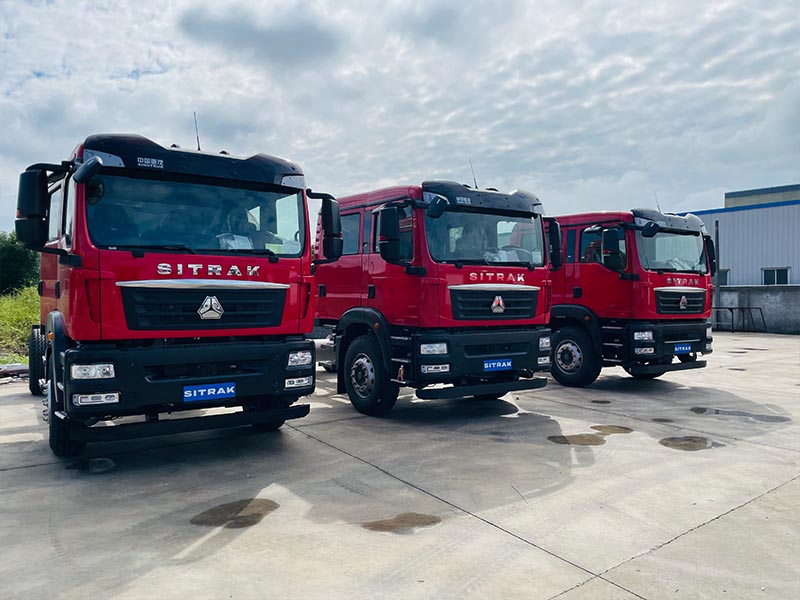
In municipal, rural, and industrial fire defense, lacking reliable hydrant access makes mobile water supply the critical point of failure. When hydrants remain scarce, your department relies entirely on mobile apparatus to sustain fireground operations. Procuring a Water Tanker Fire Truck requires balancing maximum suppression payload against road legality, response times, and crew safety. It forces fleet managers to make difficult trade-offs between carrying capacity and maneuverability. You need an apparatus engineered to navigate challenging terrains safely without compromising water delivery.
This guide breaks down the defining technical specifications, capability thresholds, and procurement criteria to help fleet managers and fire chiefs evaluate their next apparatus. We explore essential metrics, ranging from payload physics to specialized plumbing configurations. These insights ensure your next vehicle meets rigorous operational demands. We provide actionable steps to guide your selection process. You will learn how to match vehicle specifications to your unique response territory.
Key Takeaways
Targeting the correct fire truck water tank capacity requires matching local topography and NFPA (or local equivalent) rating requirements.
A high fire truck pump flow rate is only effective if the chassis and baffling systems can handle rapid load shifts.
Selecting the right dump valves and drafting capabilities significantly reduces turnaround times during continuous shuttle operations.
Procurement should weigh upfront customization against compliance standards, and manufacturer lead times.
Evaluating Fire Truck Water Tank Capacity for Your Coverage Area
Defining the operational requirement marks the first step in apparatus design. Initial attack models differ drastically from dedicated water shuttles. An initial attack vehicle requires agility for rapid deployment. It functions as a frontline offensive tool. A dedicated shuttle focuses entirely on bulk liquid transport. Selecting the optimal fire truck water tank capacity demands a thorough understanding of your response zone. You must consider bridge weight limits, road widths, and local topography. Overloading a vehicle restricts access to remote rural areas. Under-sizing it leaves crews vulnerable during major blazes.
Let us examine standard capacity tiers across the fire service industry:
Light/Tactical (1,000 – 1,500 gallons): This size proves ideal for wildland-urban interface (WUI) environments. It navigates narrow, restrictive topographies easily. These units maintain high acceleration and maneuverability. Fire departments often build these on heavy-duty commercial truck chassis.
Medium-Duty (1,500 – 3,000 gallons): Medium-capacity units (1,500–3,000 gal) are less common; municipal pumpers typically carry 500–1,500 gal, while rural water shuttles often range from 10,000–30,000 gal. They balance adequate volume against acceptable acceleration speeds. Single-axle chassis often support the lower end of this tier, while tandem axles become mandatory past 2,000 gallons.
Heavy/Industrial (3,000+ gallons): Manufacturers reserve these models for high-hazard industrial zones. Refineries and large manufacturing plants require massive suppression volumes. These trucks always require tandem or tridem rear axles for safety. They operate best on wide, paved surfaces.
Material selection directly impacts vehicle longevity and daily maintenance schedules. Buyers generally choose between Polypropylene and Stainless Steel. Polypropylene offers significant weight savings. It completely resists internal rust and corrosion, making it extremely popular. Stainless steel provides unmatched structural rigidity. It withstands extreme external impact better than plastics.
Material Type
Weight Profile
Corrosion Resistance
Longevity & Maintenance
Polypropylene (Poly)
Lightweight
Excellent (Immune to rust)
High longevity; requires UV protection
Stainless Steel (304/316)
Heavy
High (Resists pitting)
Decades of service; weld inspections needed
Aluminum
Ultra-Lightweight
Moderate (Galvanic corrosion risk)
Moderate longevity; prone to stress fractures
Fire Truck Pump Flow Rate and Delivery Systems
Matching water flow to your specific mission is absolutely critical. You must align the fire truck pump flow rate with department suppression tactics. A massive reservoir means nothing if you cannot discharge it effectively. High-volume pumps support heavy deck guns and multiple handlines. Smaller pumps work better for mop-up operations and grass fires. NFPA standards generally dictate minimum flow metrics based on apparatus classification.
Pump drive configurations dictate how the vehicle operates on the fireground. Different scenarios demand different mechanical solutions. We recommend matching the drive type to your primary response environment:
PTO (Power Take-Off) Pumps: These units are efficient and highly reliable. They draw power directly from the vehicle transmission. This configuration serves as the industry standard for "pump-and-roll" capabilities. Crews can drive and spray simultaneously during moving wildland responses.
Mid-Ship Split-Shaft Pumps: These represent the backbone of municipal firefighting. They divert full engine power to the pump module. You need this setup for high-volume stationary pumping scenarios. Mid-ship split-shaft pumps commonly deliver 1,000–1,500 GPM; select models can exceed 1,500 GPM under optimal conditions, but output depends on engine power, pump design, and suction conditions when feeding multiple attack lines simultaneously.
Portable/Auxiliary Pumps: These serve as excellent fallback options. Crews use them for drafting in hard-to-reach water sources. They operate via independent gas or diesel engines. You can dismount them and carry them to remote ponds or streams.
Plumbing specifications require careful engineering oversight during the build process. We recommend evaluating stainless steel manifolds for all primary waterways. Stainless steel manifolds offer high corrosion resistance but require regular inspection and cleaning to prevent rust flaking, especially in chlorinated or hard-water environments. Discharge configurations must match your daily operational tactics. Crosslays provide rapid handline deployment upon arrival. Deck guns deliver massive knockdown power from a stationary position. Valve durability under high PSI ensures safe, leak-free operations over time. Always specify quarter-turn ball valves for immediate flow control during chaotic incidents.
Chassis, Weight Distribution, and Payload Realities
The physics of water transport present unique engineering challenges. Water weighs roughly 8.34 pounds per gallon. A 3,000-gallon reservoir adds over 25,000 pounds of purely dynamic payload. You must highlight the implementation risk of rollover accidents. Brake degradation also occurs rapidly if the chassis is underspecified. Fluid movement creates massive kinetic energy. This energy transfers directly into the truck frame during transit, destabilizing the entire vehicle.
Advanced interior tank baffling is absolutely non-negotiable. Baffling systems mitigate dynamic water surge during transit. They act as internal structural walls inside the reservoir. These walls slow down the momentum of shifting liquids. They ensure driver control during aggressive cornering and sudden braking. Without proper baffling, a half-empty tank becomes extremely dangerous. The resulting slosh effect can easily flip a heavy apparatus, endangering the crew and the public.
Axle ratings dictate safe transportation limits. You must calculate the Gross Vehicle Weight Rating (GVWR) requirements accurately. Fleet managers must add the weight of the chassis, cab, crew, equipment, and fully loaded reservoir. You must ensure strict compliance with federal transportation regulations. Local bridge weight limits also restrict maximum allowable GVWR. Overweight vehicles cause severe infrastructure damage. They also void manufacturer warranties and expose departments to massive liability.
Braking and suspension systems must handle brutal punishment. Heavy-duty suspensions keep the vehicle level on uneven rural terrains. Air ride suspensions offer improved stability over traditional leaf springs. Auxiliary braking systems act as mandatory safety features. Engine brakes and exhaust brakes reduce wear on primary brake pads. They prevent brake fade during long downhill descents. You cannot operate a heavy tender safely without robust supplemental braking.
Essential Dump Valves and Drafting Capabilities
Efficient water shuttle operations rely on rapid turnaround times. Dumping and refilling speed dictates overall fireground success. Rapid unloading requires specialized, oversized hardware. You must evaluate rear and side dump valve dimensions carefully. Industry standards typically require 10-inch or larger discharge openings. A properly specified tender should empty its entire payload in under two minutes. Crews dump this water directly into portable drop tanks. Side dumps allow operators to unload safely on narrow dirt roads. Rear dumps work best for straight-line staging areas.
Actuation types vary based on budget and operational preference. Manual dump valves offer extreme baseline reliability. They contain no complex electrical components to fail during freezing weather. However, they require firefighters to exit the cab, exposing them to traffic. Pneumatic and electric dump valves actuate directly from the driver seat. This evaluates the trade-off between absolute reliability and operational speed. In-cab controls keep operators safe inside the vehicle. They also shave precious seconds off each delivery cycle.
Drafting capabilities determine how quickly you can reload the apparatus. Static water sources like ponds, pools, and draft tanks require powerful suction. You must review specifications for hard suction hose storage. Side-mounted hose tubes offer quick ergonomic access, reducing firefighter strain. Vacuum pump efficiency dictates priming speed. Rotary vane primers evacuate air from the pump casing rapidly. A high-efficiency primer establishes a reliable water column in under thirty seconds. This ensures continuous, uninterrupted water shuttle operations during major structural fires.
Shortlisting Logic: Procurement and Customization
Procurement requires systematic evaluation of multiple operational variables. You must look far beyond the initial sticker price. Evaluate warranty coverage for the chassis, pump, and reservoir independently. Maintenance accessibility determines daily fleet readiness. Mechanics need easy physical access to filters, fluids, and pump packing. Parts availability keeps your apparatus in active service. A custom-built truck loses practical value if replacement parts require overseas shipping. Standardized commercial chassis often provide better local service networks for rural departments.
Compliance and certification protect your department legally and operationally. Ensure the final build sheet meets NFPA 1901/1903 standards. Regional equivalents apply if operating outside North America. These rigorous standards mandate specific safety features for mobile water supply apparatus. They dictate reflective striping dimensions, warning light intensity, and roll-over protection structures. Third-party testing guarantees pump performance matches manufacturer claims before final delivery.
Vendor evaluation separates reliable partners from risky suppliers. You should interview manufacturers thoroughly before signing procurement contracts. Use structured criteria to assess their engineering capabilities and historical track record.
Here are essential questions to ask manufacturers during procurement:
How do you engineer custom chassis integration for high-capacity dynamic payloads?
What are your realistic delivery lead times given current global supply chain constraints?
Do you provide comprehensive post-delivery training for our apparatus operators and mechanics?
How do you handle warranty claims for third-party components like pumps and lighting packages?
Can you provide certified weight-and-balance engineering reports before the build begins?
Asking these questions ensures transparency. It aligns manufacturer capabilities with your department's strategic expectations.
Conclusion
A mobile water supply apparatus represents a high-stakes investment for any department. Under-specifying the vehicle compromises firefighter safety and severely limits suppression capabilities. Over-specifying wastes municipal budget and restricts maneuverability on narrow rural roads. Finding the perfect balance requires objective data analysis. It demands a thorough understanding of your specific response territory. Fleet managers must prioritize payload stability, pump efficiency, and rapid unloading systems above cosmetic customization.
To ensure a successful procurement process, take the following next actions:
Consult with internal engineering teams to define exact weight restrictions for your district.
Conduct a comprehensive weight-and-balance study based on your targeted liquid capacity.
Map out your primary drafting locations to determine necessary hose lengths and primer specifications.
Review all local bridge weight limits before finalizing axle and chassis configurations.
Release a detailed Request for Proposal (RFP) that strictly outlines safety compliance mandates.
FAQ
Q: How long does a fire engine's water last at a fire scene?
A: It depends entirely on the mathematical relationship between the fire truck water tank capacity and the active fire truck pump flow rate. For example, a 2,000-gallon tank paired with a pump operating at a 500 GPM flow rate will deplete its onboard supply in exactly 4 minutes.
Q: What is the difference between a pumper truck and a water tanker?
A: A pumper (or engine) prioritizes a high-capacity pump, extensive hose lays, and rescue gear, usually carrying a smaller water tank (500–1,000 gallons). A tanker (or tender) is purpose-built to transport massive volumes of water (up to 3,000+ gallons) to scenes without hydrants.
Q: Can a Water Tanker Fire Truck "pump and roll"?
A: Yes, provided the truck is specified with a PTO-driven pump or a separate auxiliary engine, allowing it to move while discharging water—a critical tactic for wildland and grass fires.
Q: Why is tank baffling so important?
A: Baffles are internal walls inside the water tank that slow down the momentum of shifting water. Without them, the kinetic energy of thousands of gallons of water moving during braking or turning could easily cause the truck to roll over.