Introduction
What happens when a fire breaks out in a remote area with no hydrants? A Water Tanker Fire Truck comes to the rescue. These trucks are equipped to transport large quantities of water to areas that lack access to traditional water sources. In this article, we’ll explore the crucial role of Water Tanker Fire Trucks, especially in rural and wildland firefighting operations. You’ll learn about their design, functions, and why they’re indispensable in large-scale fires.
What Is a Water Tanker Fire Truck?
Definition and Key Characteristics
A Water Tanker Fire Truck is a specialized vehicle designed to carry large amounts of water to firefighting sites. Unlike standard fire engines, which typically carry smaller water tanks, these trucks are equipped with tanks that can hold 1,000 to 4,000 gallons of water. Their primary function is to transport water to fire scenes, especially in rural or wildland areas where hydrants are not accessible.
Water Transport Capability
Water tanker fire trucks are built to carry significant water loads, ranging from 1,000 to over 4,000 gallons. This large capacity allows them to supply water to fight fires over extended periods without needing to refill constantly. Their tanks are designed for efficient water delivery through powerful pumps, which can move large volumes of water quickly to the fire scene.
Mobile Water Supply
One of the standout features of a water tanker fire truck is its ability to draft water from nearby sources, such as lakes, rivers, or portable tanks. This capability is vital for firefighting in remote areas where traditional water infrastructure like hydrants is not available. Water tankers use specialized pumps to create suction, drawing water from these natural sources and transporting it directly to the fire scene. This process allows fire crews to maintain a continuous water supply, even during large-scale wildfires or in rural areas with limited access to municipal water systems. Efficient water drafting ensures that firefighting operations remain uninterrupted and effective.
The Core Functions of a Water Tanker Fire Truck
Mobile Water Source for Firefighting
In remote areas, where fire hydrants are scarce, water tanker fire trucks serve as critical mobile water sources. These trucks can transport water over long distances to fires in wildland or rural settings. Equipped with large tanks and high-capacity pumps, they allow fire crews to fight fires continuously. The ability to draft water from lakes or rivers further enhances their effectiveness, ensuring firefighters have the necessary resources to combat large fires, especially when no reliable water supply is nearby.
Water Shuttle Operations
Water tanker fire trucks often operate in a coordinated shuttle system. In this system, several tankers work together to transport water from a water source to the fire scene, where they offload into "drop tanks" for smaller engines to draft water from. This continuous movement helps maintain a steady water supply, crucial in large fires.
Direct Support to Fire Engines
When a fire engine runs out of water, water tanker fire trucks provide direct support by connecting to the engine and supplying water. These tankers ensure that firefighting efforts remain uninterrupted, especially in rural or wildland areas where hydrants are not present. With high-capacity pumps, water tankers can rapidly deliver water to fire engines, replenishing their tanks and supporting sustained firefighting operations. This direct connection allows fire crews to focus on suppression efforts, knowing they have a steady and reliable water source.
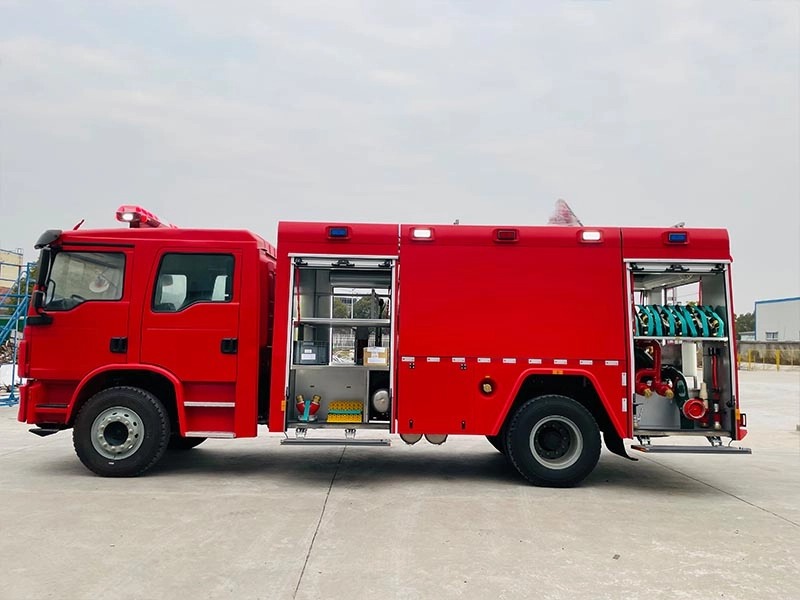
The Design and Features of a Water Tanker Fire Truck
Water Capacity and Tank Design
The design of the water tank on a water tanker fire truck must consider several factors, including capacity, stability, and material. The following table compares different water tank designs, helping you understand how each design impacts vehicle performance and safety.
| Aspect | Standard Water Tanker Design | Advanced Water Tanker Design |
| Water Tank Capacity | 1,000 to 2,500 gallons | 2,500 to 4,000 gallons |
| Tank Material | Steel or Aluminum, providing strength but heavier | Aluminum or Composite (Fiberglass), lightweight, corrosion-resistant |
| Tank Shape | Cylindrical or Rectangular | Custom-shaped to optimize space and weight distribution, often cylindrical |
| Baffle System | Basic baffles to reduce sloshing during transit | Advanced baffle design for improved stability, preventing sloshing on rough terrain |
| Mounting Location | Mounted on the chassis, rear or side | Typically mounted for optimal weight distribution and easy access |
| Tank Coating | Basic protective coatings to prevent rust and wear | High-quality coatings that offer enhanced resistance to corrosion and damage from water |
| Operational Considerations | Regular inspections to ensure no leaks or blockages | Requires regular checks for structural integrity, anti-corrosion performance, and tank capacity verification |
| Maintenance Frequency | Inspected every 6 months or after heavy use | Inspected quarterly and after each deployment, ensuring tank and pump system efficiency |
Tip: Using an advanced design water tanker truck increases transport efficiency and reduces stability issues during transit. Regularly check the anti-corrosion coating to extend the lifespan of the tank.
Pumping Systems
The pumping system on a water tanker fire truck plays a key role in water distribution. Many modern water tankers are equipped with high-capacity pumps (750-1,500 GPM) that allow them to pump water efficiently to both fire engines and fire hoses. These pumps are designed for quick deployment and high-pressure delivery to support firefighting efforts in emergency situations.
Specialized Equipment and Foam
In addition to water, modern water tanker fire trucks may carry firefighting foam. This foam helps to suppress fires more effectively, especially in situations involving flammable liquids. The foam system on these trucks ensures that they can address a variety of fire scenarios, from wildfires to industrial blazes.
Why Are Water Tanker Fire Trucks Crucial for Rural and Wildland Fires?
Absence of Hydrants in Rural Areas
In rural or wildland areas, fire hydrants are often not available. This makes it difficult to quickly access the water needed to fight large fires. Water Tanker Fire Trucks fill this gap by transporting water to these hard-to-reach areas. Their ability to carry large water loads ensures that firefighting efforts can continue even in remote locations.
Wildfire Support
During wildfires, water tanker fire trucks are indispensable. They are deployed in large-scale wildfire operations, where they can deliver water to remote locations that lack infrastructure. Tankers work in tandem with other firefighting vehicles to suppress fires and prevent their spread, especially in dry, fire-prone areas.
Quick Deployment in Emergencies
Water tanker fire trucks are designed for quick deployment. In an emergency, these trucks can be mobilized to provide water in areas where there is no immediate water source. This rapid response capability is vital in disaster situations, where time is critical to prevent further damage and protect lives.
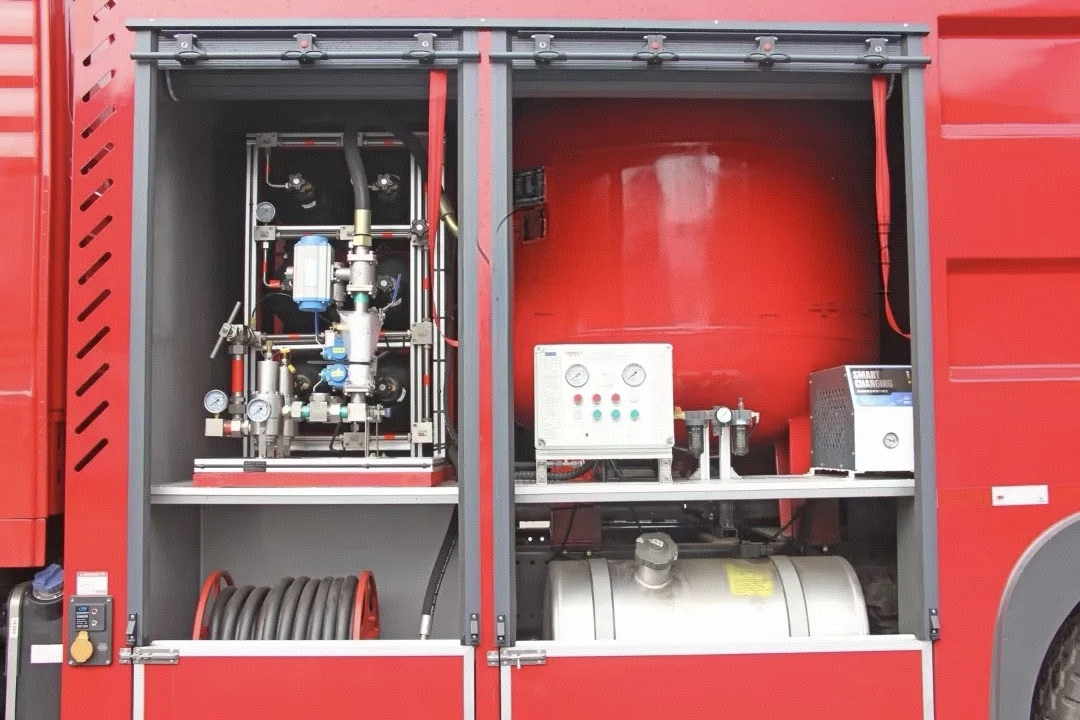
How Water Tankers Operate in Firefighting Scenarios
Formation of Tanker Shuttles
In large fires, water tanker fire trucks operate in a shuttle system, where several tankers transport water from a water source to the fire scene. Each tanker continuously moves between the fire and the water source, ensuring that the fire remains adequately supplied with water for prolonged periods.
Dumping Water into Drop Tanks
Portable Drop Tanks are essential for maintaining a steady water supply at fire scenes where hydrants are unavailable. After water tanker fire trucks offload water into these large, collapsible tanks, smaller fire engines can draft water from them to continue firefighting efforts. This method creates a continuous water flow, crucial for sustaining operations during large fires. Drop tanks are often equipped with high-flow valves to allow quick access to water, improving the efficiency of firefighting teams and reducing response time in critical situations.
Water Supply During a Fire Crisis
During a fire crisis, water tanker fire trucks are essential for maintaining a constant water supply. Without them, firefighting efforts would be hindered, as the available water supply could quickly run out. Tankers ensure that water is always available for fire engines, even when the fire is spreading across large areas.
Technical Specifications of a Water Tanker Fire Truck
Water Capacity and Tank Dimensions
Water tanker fire trucks are designed to carry large amounts of water, with capacities typically ranging from 1,000 to 4,000 gallons. The size and design of the tank are crucial for transporting large volumes of water over long distances without compromising the stability of the truck.
Pumping Power and GPM
The water pump is the core component of a water tanker fire truck, and different pumping capacities and system designs can affect firefighting efficiency. The following table compares the capacities of common pumps, their applications, and operational modes.
| Aspect | Standard Pump Design | High-Performance Pump Design |
| Pump Capacity (GPM) | 750 GPM to 1,000 GPM | 1,200 GPM to 1,500 GPM |
| Pump Type | Centrifugal Pump, common for general firefighting | Multi-stage Centrifugal Pump, used for high-pressure firefighting scenarios |
| Power Source | Powered by main engine or a separate diesel engine | Powered by dedicated diesel engine, optimized for continuous high flow |
| Pressure Delivery | Suitable for most fire scenes, not for extreme pressure | High-pressure output for large-scale fires, able to handle more intense scenarios |
| Pump Operation Modes | Single mode: direct flow to fire engines | Multiple modes: direct flow, offloading to drop tanks, high-pressure stream generation |
| Efficiency | Efficient for medium-scale fires and routine support | Extremely efficient for large wildfires or remote fire suppression |
| Applications | Suitable for urban, suburban, and small rural fires | Ideal for wildfires, rural fires, and large-scale industrial fires |
| Pump Maintenance | Requires regular cleaning and occasional calibration | Requires frequent checks for clogging, wear, and recalibration for optimal pressure output |
Tip: Using high-performance pumps in large-scale fires significantly improves firefighting efficiency. Ensure regular maintenance of pumps to maintain stable high-pressure output.
Specialized Safety Features
Water tanker fire trucks are equipped with several safety features to enhance stability during operations, particularly in rough or off-road conditions. Baffled tanks are one of the most important features, as they prevent the water from sloshing inside the tank, which could cause the vehicle to become unstable or tip over. Additionally, many water tankers are designed with low centers of gravity and reinforced suspensions to improve balance. These features are critical in wildland firefighting, where trucks often traverse uneven, hilly terrain, ensuring that the vehicle remains stable while transporting large volumes of water.
Conclusion
Water Tanker Fire Trucks are vital for firefighting operations, particularly in rural and wildland areas where hydrants are not available. These trucks provide a crucial mobile water supply during large-scale fires, ensuring continuous firefighting efforts by forming water shuttle systems and supporting fire engines. Their ability to transport and deliver large volumes of water, even in remote locations, makes them indispensable. The design and versatility of Water Tanker Fire Trucks are unmatched in modern firefighting strategies. Yongan Fire Safety Group Co., Ltd. offers innovative and reliable Water Tanker Fire Trucks, ensuring that firefighting teams have the best equipment for efficient and rapid fire suppression.
FAQ
Q: What is a Water Tanker Fire Truck?
A: A Water Tanker Fire Truck is a specialized vehicle designed to carry large amounts of water to fire scenes, particularly in areas without access to hydrants. It helps provide a mobile water source for firefighting operations.
Q: How does a Water Tanker Fire Truck support firefighting efforts?
A: Water Tanker Fire Trucks transport water to fire scenes, supply water to fire engines, and operate in shuttle systems to maintain a continuous water supply during large-scale fires, especially in rural and wildland areas.
Q: Why are Water Tanker Fire Trucks important for rural firefighting?
A: Water Tanker Fire Trucks are essential in rural areas without hydrants. They ensure continuous water supply during firefighting operations by transporting large quantities of water to remote locations.
Q: How much water can a Water Tanker Fire Truck carry?
A: Water Tanker Fire Trucks can carry between 1,000 and 4,000 gallons of water, depending on the truck’s design, ensuring an adequate water supply during emergencies.
Q: How do Water Tanker Fire Trucks operate in large fires?
A: Water Tanker Fire Trucks often operate in a shuttle system, where they transport water to drop tanks, from which smaller fire engines draft water, ensuring a steady water flow during large fires.
Q: What are the safety features of a Water Tanker Fire Truck?
A: Water Tanker Fire Trucks are equipped with safety features like baffled tanks that prevent water from sloshing, ensuring stability during off-road or rough terrain firefighting operations.


