Introduction
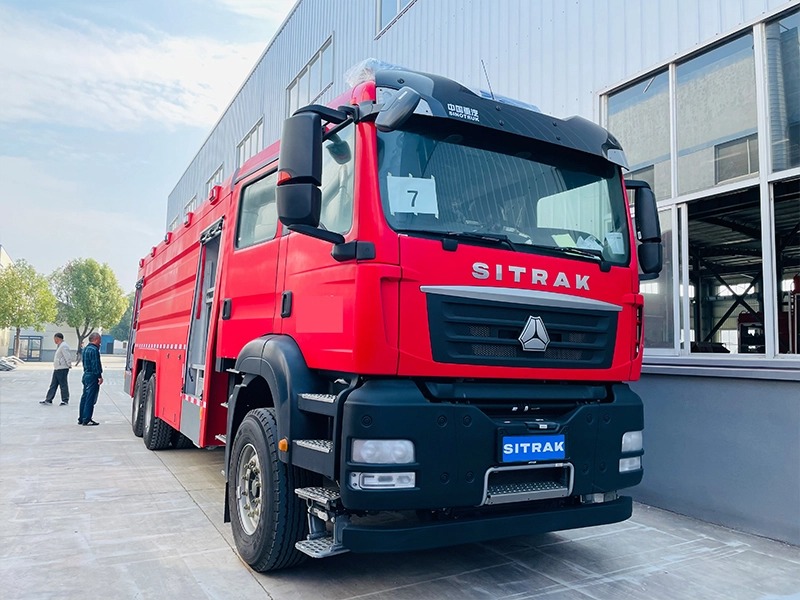
Firefighting has evolved, and powder fire trucks have become an essential tool in combating some of the most dangerous fires. In environments with flammable liquids, gases, and chemicals, traditional water-based methods often fall short. In this article, we’ll explore how powder fire trucks work, focusing on their key features and practical applications. You'll learn how these trucks are equipped to handle hazardous fires and why they are indispensable in industries like chemical plants, oil refineries, and airports.
Key Features of Powder Fire Trucks
High-Capacity Dry Powder Tanks
Powder fire trucks are equipped with large storage tanks designed to hold significant quantities of dry powder extinguishing agents. These tanks typically range from 2,000 kg to 4,000 kg, ensuring that the truck can tackle extensive fires without running out of powder. The tanks are constructed to prevent moisture buildup and ensure the powder remains free-flowing, which is critical for efficient operation.
Pressurization and Delivery Systems
To expel the dry powder effectively, these trucks use high-pressure nitrogen systems. Nitrogen is a preferred propellant because it’s inert, non-corrosive, and prevents moisture from contaminating the powder. The nitrogen allows the dry powder to be forcefully ejected over long distances, ensuring a quick and effective response to fires. This pressurization system provides firefighters with the ability to maintain a safe distance from dangerous fires while still delivering powerful suppression.
Advanced Nozzles and Turrets
Powder fire trucks are equipped with advanced nozzles and turrets that provide precise control over powder application. Many of these nozzles are remotely operated, allowing firefighters to direct the dry powder at the fire from a safe distance. This precision ensures that the fire is quickly suppressed while minimizing risks to personnel.
Pneumatic Systems and Nitrogen Propulsion
Unlike traditional firefighting vehicles that use mechanical pumps, powder fire trucks use nitrogen as a propellant. The nitrogen is stored in high-pressure cylinders and regulated to a lower pressure before being directed into the powder tank. This ensures that the powder is delivered smoothly and at a consistent rate, preventing clumping or blockage. The use of nitrogen also makes these trucks more versatile in environments where other systems might fail due to chemical reactivity or the presence of flammable gases.
How Dry Powder Extinguishes Fires
Chemical Interruption of Combustion
Dry powder works by interrupting the chemical chain reaction of combustion. Fires are sustained by a series of reactions that produce free radicals. When the dry powder is discharged onto the fire, its particles act as a surface for these radicals to recombine, effectively halting the reaction. This rapid chemical intervention stops the fire almost instantly, providing fast and reliable fire suppression.
Smothering Effect
The dry powder forms a dense blanket over the burning materials, cutting off the fire’s access to oxygen. By smothering the flames, the powder suppresses combustion and prevents re-ignition. This smothering action is particularly important for fires involving flammable liquids and gases, where oxygen availability is a key factor in fire spread.
Heat Absorption and Fire Containment
Some dry powder agents have the ability to absorb significant amounts of heat. By reducing the temperature of the burning material, the powder prevents the fire from escalating, making it easier to contain. This heat-absorbing property is particularly useful in managing large-scale fires where high temperatures can quickly lead to dangerous flare-ups.

Applications of Powder Fire Trucks
Chemical Plants and Industrial Facilities
In chemical plants and industrial environments, the risk of fires involving flammable liquids, gases, and chemicals is high. Water-based fire suppression methods are often ineffective, and sometimes even dangerous, in these settings. Powder fire trucks provide an essential solution by delivering dry powder agents that can suppress fires quickly without exacerbating the situation. These trucks are critical in industries where safety standards and fire prevention are of the utmost importance.
Oil Refineries and Storage Depots
Oil refineries and storage depots are among the highest-risk areas for fire hazards. These locations often deal with large quantities of flammable liquids and gases, and the possibility of fires spreading quickly is always present. Powder fire trucks can suppress these types of fires rapidly, minimizing the risk of explosions and protecting both personnel and valuable assets. The ability to tackle fires from a safe distance is a significant advantage in these volatile environments.
Aircraft Rescue and Firefighting (ARFF)
This table provides a detailed breakdown of how powder fire trucks are used in aircraft rescue and firefighting (ARFF), focusing on their application, considerations, and technical specifications.
| Feature | Description | Technical Specifications |
| Purpose and Functionality | Powder fire trucks in airports and aircraft hangars are equipped with high-capacity dry powder systems to tackle aviation fuel fires. Water-based methods are ineffective for such fires, making dry powder the optimal choice. | Storage capacity: 2,000–4,000 kg of dry powder.
High-pressure nitrogen system for rapid deployment.
Remote-controlled nozzles for precise targeting. |
| Effectiveness in Aviation Fuel Fires | Dry powder extinguishes fires by smothering the flames, cutting off the fire's oxygen supply, and preventing re-ignition. This is crucial in aviation fuel fires, which burn hotter and faster than most other types of fires. | Discharge system: High-pressure nitrogen for rapid powder delivery.
Effective for Class B fires (flammable liquids) and Class C (flammable gases). |
| Rapid Response and Safety | The design of powder fire trucks ensures fast deployment to contain fires at an early stage, minimizing risk to both aircraft and personnel. This rapid response is vital to prevent extensive damage or loss. | Deployment time: Less than 30 seconds from activation.
Powder application speed: Instantaneous upon discharge. |
Tip:Ensure powder fire trucks are equipped with the correct dry powder agents and that their nitrogen systems are fully functional. Quick deployment is critical for minimizing damage during aircraft emergencies.
Metal Processing and Manufacturing Sites
Metal processing facilities often handle combustible metals such as magnesium or sodium, which burn at extremely high temperatures and react violently with water. In these environments, powder fire trucks are indispensable. The dry powder agents used in these trucks are designed to smother metal fires and interrupt the combustion process without reacting with the burning metal. This makes powder fire trucks essential in preventing catastrophic fires in metal manufacturing and processing industries.
Advantages of Powder Fire Trucks
Versatility Across Fire Classes
One of the key advantages of powder fire trucks is their versatility. These vehicles are capable of suppressing multiple classes of fire, including Class B (flammable liquids), Class C (flammable gases), and Class D (combustible metals). This wide-ranging capability ensures that a single powder fire truck can handle various types of fires in different industrial settings, making it an invaluable tool for fire safety teams.
Rapid Fire Suppression
The high-pressure systems in powder fire trucks allow for rapid deployment of the dry powder agent. This quick action is crucial in preventing fire escalation and minimizing damage. The ability to control and suppress large-scale fires within a short time frame makes these vehicles particularly valuable in high-risk environments where every second counts.
Safety Around Electrical Hazards
Powder fire trucks are ideal for handling electrical fires. Since dry powder is non-conductive, it can be safely applied to electrical equipment without the risk of electrocution. This feature makes powder fire trucks particularly valuable in environments such as power plants, manufacturing facilities, and airports, where electrical equipment is prevalent.
Minimal Collateral Damage
Unlike water-based fire suppression systems, which can cause extensive water damage to sensitive equipment, dry powder agents leave minimal collateral damage. This is especially important in environments where equipment is costly and downtime can lead to significant financial losses. Powder fire trucks help protect both the facility and its assets from unnecessary damage.
Limitations of Powder Fire Trucks
Residue Cleanup
One of the major challenges with powder fire trucks is the residue left behind after the fire is suppressed. The dry powder can be difficult to clean and may cause long-term damage to sensitive equipment. In some cases, the powder may need to be removed with specialized cleaning techniques to prevent corrosion or other forms of damage.
Inhalation Hazards
Dry powder agents can pose health risks if inhaled, as they may irritate the respiratory system. It is essential for operators to wear proper protective gear, including masks and respirators, when handling dry powder in firefighting situations. This safety precaution ensures that the firefighting crew remains protected from potential health hazards.
Limited Effectiveness on Certain Fires
While dry powder is highly effective for most fires, it is not suitable for all types of fires. For example, dry powder may not be as effective in suppressing electrical fires involving high-voltage equipment, as it can cause corrosion on sensitive components. In these cases, alternative agents like CO2 or clean agents may be more appropriate.
Innovations in Powder Firefighting
Automated and Remote-Controlled Systems
Recent advancements in firefighting technology have introduced automated and remote-controlled systems for powder fire trucks. These systems allow operators to fight fires from a safe distance with high precision. By using remote-controlled nozzles or turret systems, firefighters can apply the powder effectively without being exposed to the dangers of the fire.
Dual-Agent Systems
Modern powder fire trucks equipped with dual-agent systems allow firefighters to switch between dry powder and foam depending on the fire type. This flexibility enhances fire suppression capabilities, especially in complex fire scenarios involving both flammable liquids and gases. The following table explains how dual-agent systems work, their applications, considerations, and technical specifications.
| Feature | Description | Technical Specifications |
| Dual-Agent Flexibility | The dual-agent system allows firefighters to switch between dry powder and foam depending on the fire type. Dry powder is ideal for flammable liquids and metals, while foam is more effective for liquid fires, especially large-scale ones. | Agent types: Dry powder (ABC, BC) and foam (AFFF, AR-AFFF).
Switching mechanism: Automatic or manual switch between agents. |
| Application in Complex Fire Scenarios | In scenarios involving both flammable liquids and gases, dual-agent systems offer a versatile solution by using foam to suppress liquid fires and powder for gas or metal fires. This makes it suitable for petrochemical plants, refineries, and airports. | Multi-agent application: Simultaneous or sequential use based on fire class.
Range: Adjustable, depending on the agent used. |
| Efficiency in Fire Suppression | The ability to choose between two types of agents enhances efficiency, as the most appropriate agent can be used for the specific fire. This flexibility reduces response time and enhances the effectiveness of firefighting efforts. | Deployment time: Rapid switch between agents.
Flow rate: Adjustable for both foam and powder discharge. |
| Considerations | Proper training is essential to ensure firefighters know when to use each agent. The system must also be maintained to prevent cross-contamination between the foam and powder. | Regular system checks for agent compatibility.
Ensure the foam and powder storage are separate to avoid contamination. |
Tip:When using dual-agent systems, ensure that both agents are compatible and the system is regularly checked for cross-contamination. Proper use of foam for liquid fires and powder for gas or metal fires maximizes suppression efficiency.
Eco-Friendly Powder Innovations
As environmental concerns continue to rise, manufacturers are developing eco-friendly dry powder agents that reduce the environmental impact of firefighting. These innovative powders maintain high performance while being safer for the environment, offering a more sustainable solution for fire suppression.
Conclusion
Powder fire trucks play a vital role in modern firefighting, particularly in hazardous environments where traditional methods fail. These specialized trucks are designed to suppress fires involving flammable liquids, gases, metals, and chemicals, offering a powerful and efficient solution. With their advanced systems, including high-capacity dry powder tanks and pressurization systems, powder fire trucks provide rapid fire suppression in industries like chemical plants, oil refineries, and metal processing sites. Their versatility, rapid response, and ability to tackle various fire types make them invaluable for fire safety teams. As firefighting technology progresses, companies like Yongan Fire Safety Group Co., Ltd. continue to innovate, offering high-quality powder fire trucks that provide critical protection in volatile environments. Their products ensure that fire suppression is both effective and environmentally friendly, enhancing safety in industries worldwide.
FAQ
Q: What is a Powder Fire Truck?
A: A Powder Fire Truck is a specialized firefighting vehicle equipped with dry powder agents to suppress fires involving flammable liquids, gases, and metals. It uses high-pressure systems to discharge powder quickly and efficiently.
Q: How does a Powder Fire Truck work?
A: Powder Fire Trucks expel dry powder using high-pressure nitrogen systems. The powder interrupts combustion by blocking oxygen and absorbing heat, providing fast and effective fire suppression, especially in hazardous environments.
Q: What are the advantages of using a Powder Fire Truck?
A: Powder Fire Trucks offer rapid fire suppression, versatility across fire classes (B, C, D), and minimal collateral damage. They are ideal for use in chemical plants, oil refineries, and metal processing industries.
Q: Why are Powder Fire Trucks essential in industrial environments?
A: Powder Fire Trucks are crucial in environments where traditional water-based methods are ineffective or dangerous, such as chemical plants and oil refineries. They ensure quick and efficient fire suppression in volatile settings.
Q: Can a Powder Fire Truck handle electrical fires?
A: Yes, Powder Fire Trucks are non-conductive and can safely handle electrical fires. Their dry powder agents can be applied to electrical equipment without the risk of electrocution.
Q: How does a Powder Fire Truck differ from traditional fire trucks?
A: Unlike traditional fire trucks that use water or foam, Powder Fire Trucks use dry powder agents to suppress fires. This makes them more effective in tackling fires involving flammable liquids, gases, and metals.


